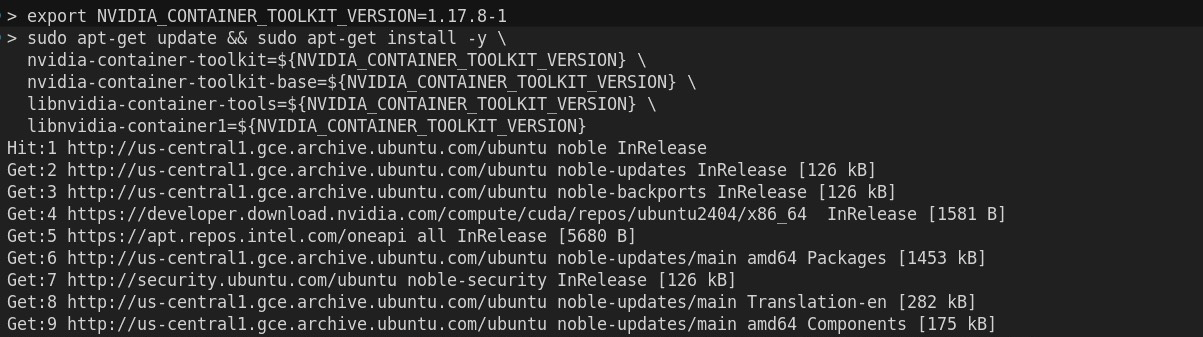
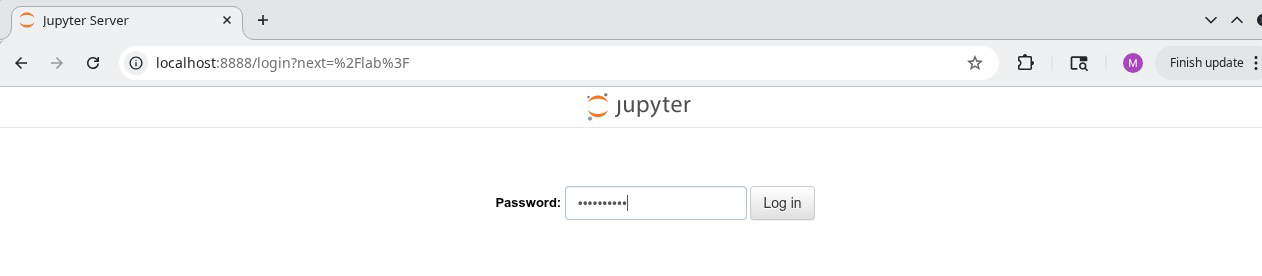
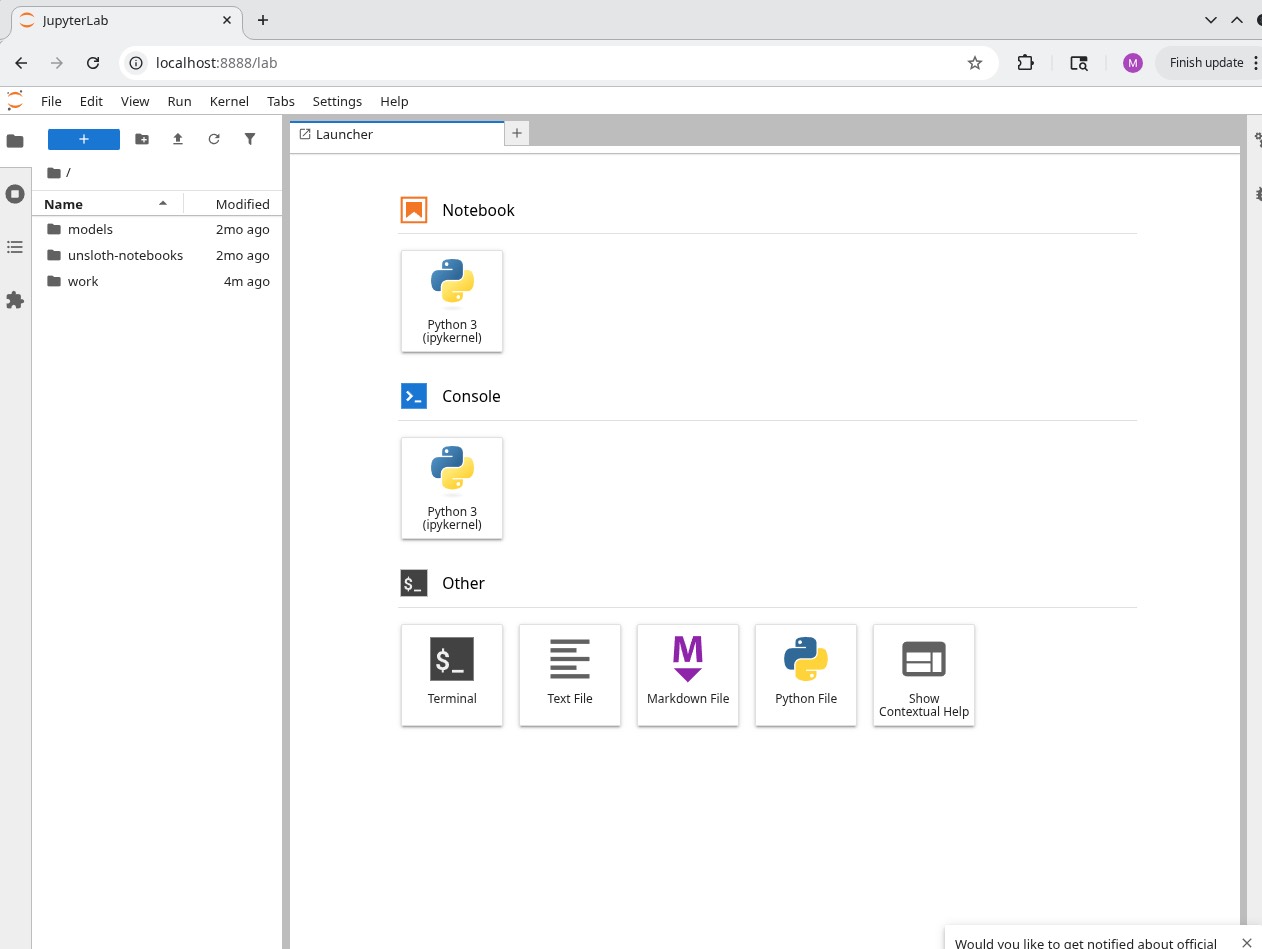
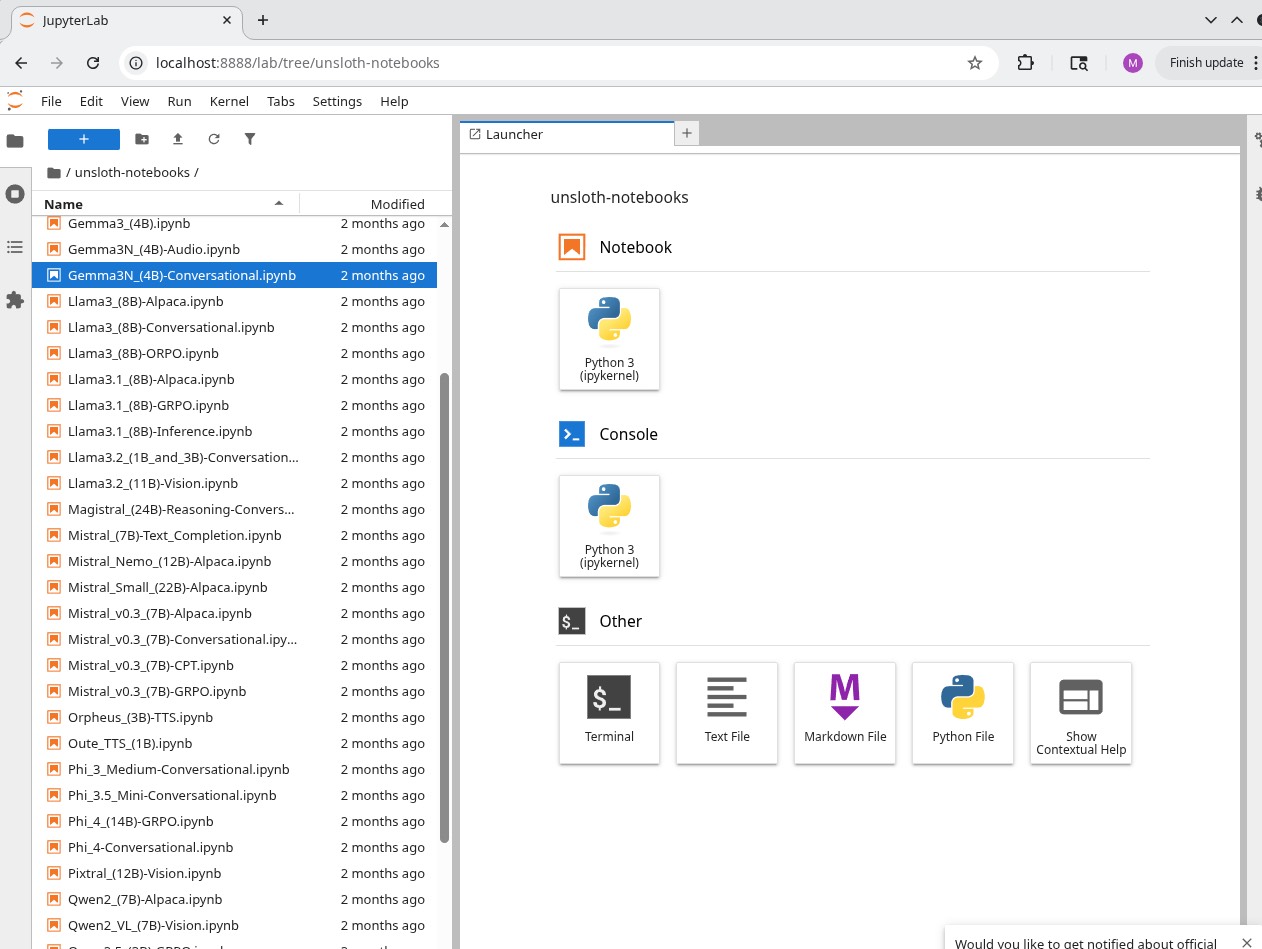
{% endstep %}
{% step %}
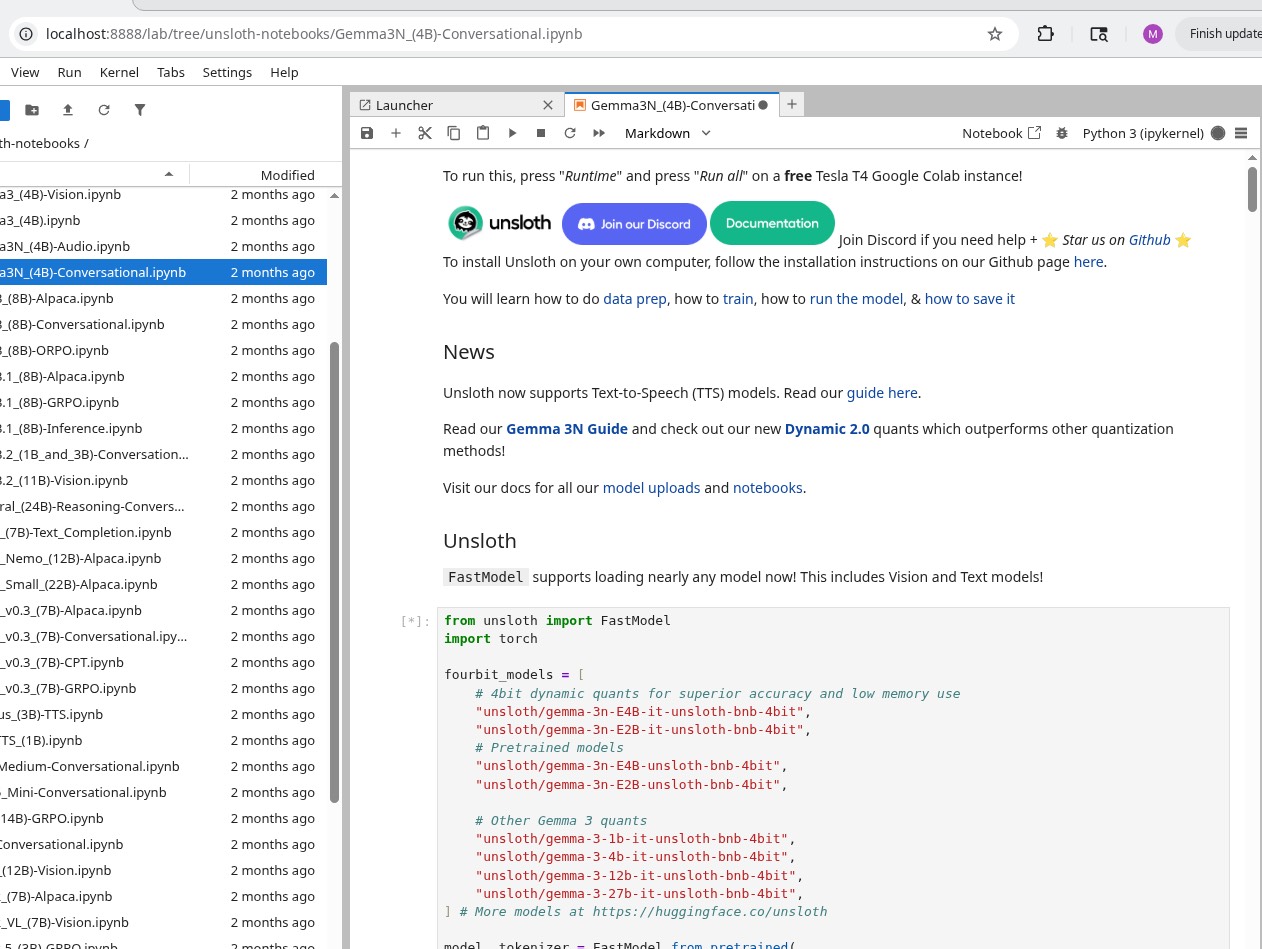
**开始使用 Unsloth 训练**
如果你是新手,请按照我们的分步 [微调指南](/docs/zh/kuai-su-kai-shi/fine-tuning-llms-guide.md), [RL 指南](/docs/zh/kuai-su-kai-shi/reinforcement-learning-rl-guide.md) ,或者 պարզապես保存/复制我们任何预制的 [笔记本](/docs/zh/kuai-su-kai-shi/unsloth-notebooks.md).
{% endstep %}
{% endstepper %}
#### 📂 容器结构
* `/workspace/work/` — 你挂载的工作目录
* `/workspace/unsloth-notebooks/` — 微调示例笔记本
* `/home/unsloth/` — 用户主目录
### 📖 使用示例
#### 完整示例
```bash
docker run -d -e JUPYTER_PORT=8000 \
-e JUPYTER_PASSWORD="mypassword" \
-e "SSH_KEY=$(cat ~/.ssh/container_key.pub)" \
-e USER_PASSWORD="unsloth2024" \
-p 8000:8000 -p 2222:22 \
-v $(pwd)/work:/workspace/work \
--gpus all \
unsloth/unsloth
```
#### 设置 SSH 密钥
如果你没有 SSH 密钥对:
```bash
# 生成新的密钥对
ssh-keygen -t rsa -b 4096 -f ~/.ssh/container_key
# 在 docker run 中使用公钥
-e "SSH_KEY=$(cat ~/.ssh/container_key.pub)"
# 通过 SSH 连接
ssh -i ~/.ssh/container_key -p 2222 unsloth@localhost
```
### ⚙️ 高级设置
| 变量 | 描述 | 默认 |
| ------------------ | ----------------------- | --------- |
| `JUPYTER_PASSWORD` | Jupyter Lab 密码 | `unsloth` |
| `JUPYTER_PORT` | 容器内的 Jupyter Lab 端口 | `8888` |
| `SSH_KEY` | 用于身份验证的 SSH 公钥 | `无` |
| `USER_PASSWORD` | 密码用于 `unsloth` 用户(sudo) | `unsloth` |
```bash
-p :
```
* Jupyter Lab: `-p 8000:8888`
* SSH 访问: `-p 2222:22`
{% hint style="warning" %}
**重要**:使用卷挂载,以便在容器多次运行之间保留你的工作。
{% endhint %}
```bash
-v :
```
```bash
docker run -d -e JUPYTER_PORT=8000 \
-e JUPYTER_PASSWORD="mypassword" \
-e "SSH_KEY=$(cat ~/.ssh/container_key.pub)" \
-e USER_PASSWORD="unsloth2024" \
-p 8000:8000 -p 2222:22 \
-v $(pwd)/work:/workspace/work \
--gpus all \
unsloth/unsloth
```
### **🔒 安全说明**
* 容器默认以非 root `unsloth` 用户运行
* 使用 `USER_PASSWORD` 用于在容器内执行 sudo 操作
* SSH 访问需要公钥认证
---
# Agent Instructions
This documentation is published with GitBook. GitBook is the documentation platform designed so that both humans and AI agents can read, navigate, and reason over technical content effectively. Learn more at gitbook.com.
## Querying This Documentation
If you need additional information that is not directly available in this page, you can query the documentation by asking a question.
Perform an HTTP GET request on the following URL with the `ask` and `goal` query parameters:
```
GET https://unsloth.ai/docs/zh/bo-ke/how-to-fine-tune-llms-with-unsloth-and-docker.md?ask=&goal=
```
`ask` is the immediate question: it should be specific, self-contained, and written in natural language.
`goal` is what the user is ultimately trying to achieve, the reason they need the answer. Sharing it helps GitBook give you a better, more relevant answer. A goal is most helpful when it describes the outcome the user wants rather than restating the question. For example, with `ask=how do I create an API token`, a goal like `automate deployments from our CI pipeline` lets GitBook tailor the answer to that use case.
The response will contain a direct answer to the question and relevant excerpts and sources from the documentation.
Use this mechanism when the answer is not explicitly present in the current page, you need clarification or additional context, or you want to retrieve related documentation sections.